
| Part of the visit | Where to look for payment | What to clarify |
|---|---|---|
| A scheduled vaccine dose | The preventive/wellness schedule, if purchased. | Named vaccine or category, number of eligible doses and remaining allowance. |
| The healthy-pet exam | A wellness-exam benefit. | Whether the exam has its own cap rather than sharing the vaccine allowance. |
| Tests recommended for prevention | The specific screening benefit, if included. | A vaccine benefit alone does not establish payment for bloodwork or other screening. |
| Assessment of a new illness discovered at the visit | The accident-and-illness policy, if the condition and service qualify. | Ask for an accurately itemized invoice; the reason for each service matters. |
| Treatment after a suspected vaccine reaction | The medical policy’s applicable terms. | Do not infer eligibility from reimbursement of the vaccine itself; get veterinary care and ask the insurer to assess the treatment. |
The care schedule comes first
Pet insurance and vaccinations
Use your veterinarian’s vaccine plan to evaluate routine-care benefits, without confusing prevention with treatment for an illness.
✓ Policy-first
✓ Independent
✓ Useful checks
Direct answer
Routine vaccinations usually sit outside accident-and-illness pet insurance unless a separate preventive or wellness benefit is included. Check the actual vaccine allowance, eligible doses and service limits before expecting reimbursement. Insurance benefits should follow the vaccination plan your veterinarian recommends; do not postpone needed care to fit a benefit year or buy an unnecessary dose to use an allowance.
What to know
One appointment can create different kinds of expense
What to know
Let the veterinarian set the schedule

AVMA explains that vaccine choices and timing depend on the pet’s needs and exposure. Puppy and kitten series, adult boosters, travel and contact with other animals can require different plans. Not every vaccine is needed at every annual visit.
Bring your pet’s previous vaccination records to the appointment, especially after adoption or a change of clinic. Ask the veterinarian which doses are due and which can wait safely. The insurance calendar is a financial constraint to understand, not a clinical reason to accelerate or delay a dose.
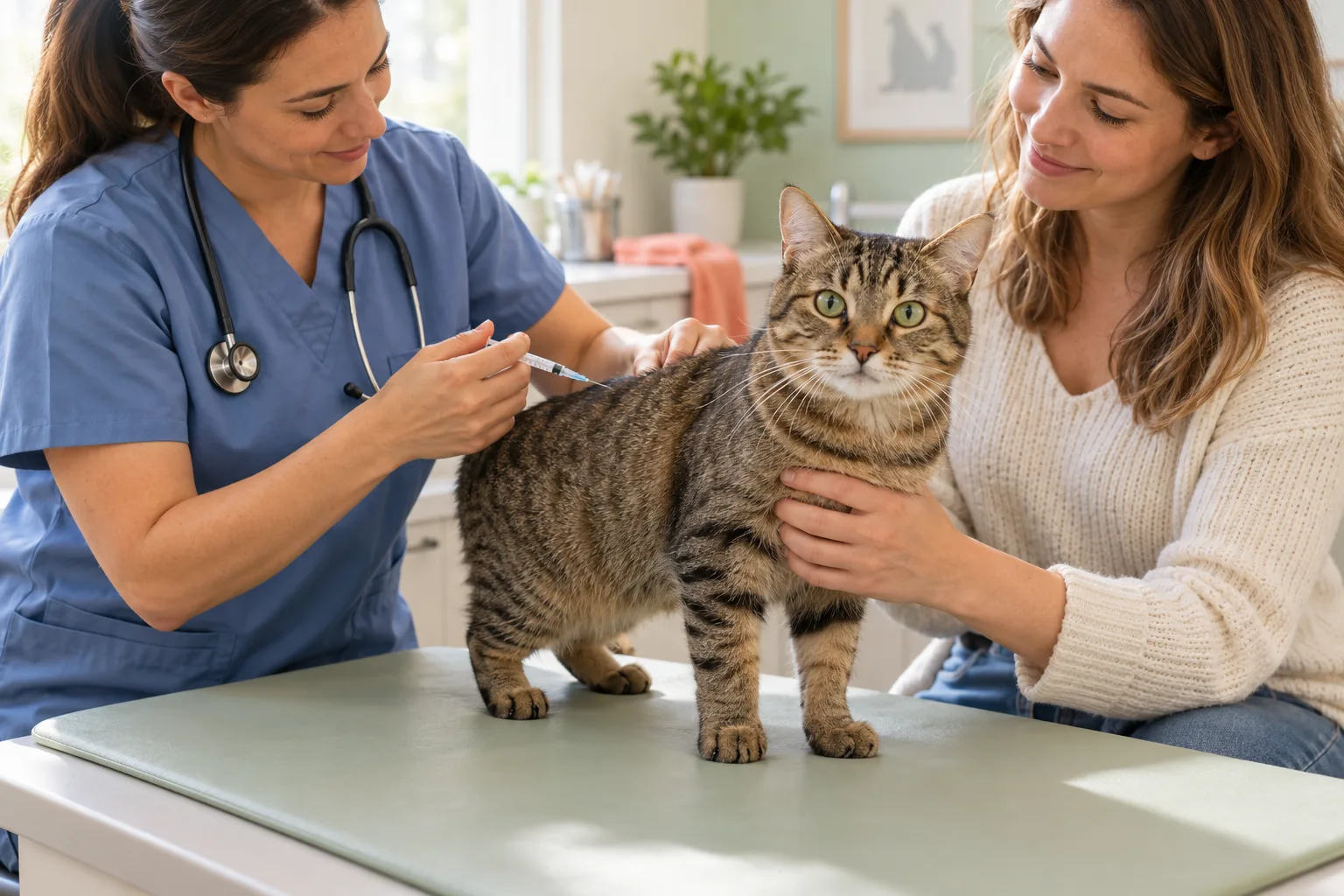
Ask the veterinarian which vaccinations are due, then check the benefit schedule for those services.
Coverage
Read the benefit schedule beside the care plan
- Find the vaccine category and any named eligible vaccines. Does the schedule limit the number of doses, the dollar amount or both?
- Check whether a combination vaccine counts as one administration or under another rule. If unclear, ask before relying on the allowance.
- Identify whether the exam and vaccine administration charges share a benefit or are separate invoice items.
- Confirm the benefit period, remaining balance and any start-date rules for the actual option you are offered.
- Ask what the claim must show: pet identity, date of service, itemized vaccine name, provider and proof of payment as required.
- Check whether the option must remain attached to a medical policy, and review its cancellation or renewal terms.
What to know
A current example shows why the exact option matters
One listed Routine Vet Care package includes three vaccines per year, but that headline does not tell you which option your pet can buy, the payable amount per service or whether it fits the doses your veterinarian recommends.
Use the schedule in your actual offer. An advertised count is not a promise that every vaccine, booster, administration charge and exam is reimbursed in full. A different package or state form can change the calculation. The base accident-and-illness policy should be assessed for its medical protection separately.
Compare
Compare likely usable benefits with the extra cost
Start with the care you already expect to obtain on veterinary advice. Beside each service, write its expected clinic price and the most the offered benefit would reimburse under its own limits. Add only benefits you can reasonably use during the period, and compare that total with the package’s additional cost.
Do not count an unused dental allowance or an unnecessary test as savings. Equally, do not judge an accident-and-illness policy by whether a vaccine allowance pays for itself: unpredictable medical-risk protection and scheduled routine benefits serve different financial purposes. If the preventive option is not worthwhile, you can still budget for recommended vaccinations directly.
Claims
Keep the medical record and the reimbursement record
Ask for a record of vaccine names and dates for future care, travel or boarding requirements. Keep the itemized receipt for any benefit claim. These documents answer different questions: one records protection received, while the other supports the amount paid.
If a claim is lower than expected, compare the explanation with the vaccine category, cap, dose count and benefit balance. Request clarification of the particular line item. Do not ask the clinic to reclassify preventive care as illness treatment to obtain payment.
If your pet develops concerning symptoms after vaccination, contact the veterinarian. AVMA advises owners to discuss previous vaccine reactions and to seek prompt care for serious reactions. The medical response comes first; coverage is assessed separately.
Evidence
Sources and policy context
AVMA: vaccinations for pets
Read the source →
Pennsylvania insurance department: pet insurance
Read the source →
Public references support the consumer, financial and veterinary context described above. Named product features were checked in official insurer materials; the contract issued for the pet and state controls an individual claim.
Next step
Compare Current Pet Insurance Rates
Check current options for your pet and location, then compare the policy details, exclusions, costs, and eligibility before choosing.